
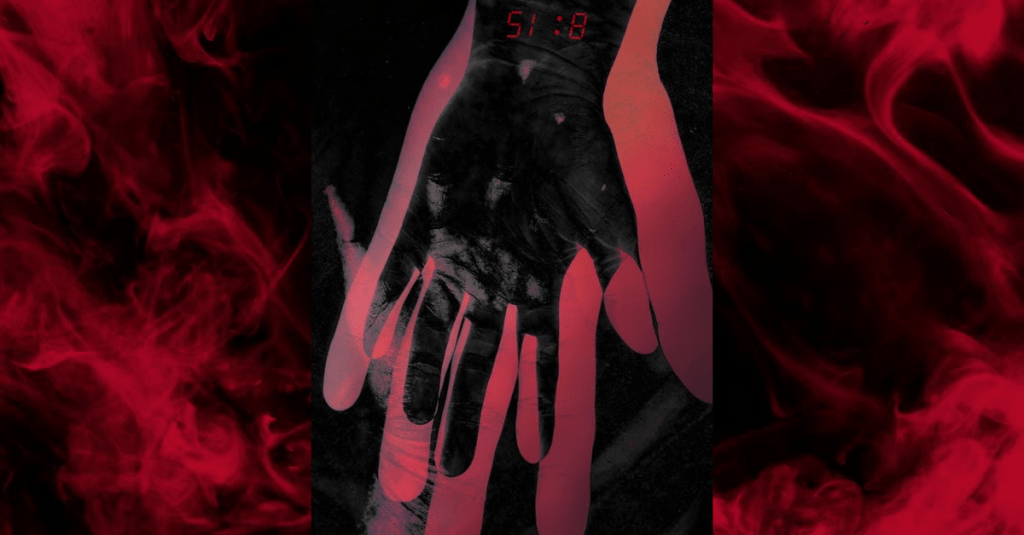
by Romie Asplund, art by Carella Keil
Hiroshima, Japan
August 6, 1945
THE CLASSROOM
“Ohayou gozai masu.”
Misao smushed the butt of her cigarette into an orange ashtray sat at the very center of a city of paper. Skyscrapers, like the ones in America, probably, of half-graded essays and sloping homes of redded-out chicken scratch mottled the grand blueprint of her rusting desk. Amidst the stomps and screeches of children filling up the empty seats before her, Misao set free the final smoke-ghost she’d been savoring under her tongue, surrendering to the tick-tick-gong of 8:00 a.m.
It wasn’t like Misao forgot about the funeral last weekend. Killed in action, Junko’s father had been, on some godforsaken island in the Pacific—lost to the ferns and cicadas of a late-July skirmish.
“Ohayou gozai masu, Koda-sensei!” said Junko Honma, flushed and breathless.
“Good morning, Miss Honma. Long time no see. Have you been enjoying your summer vacation? I take it you’ve been getting in plenty of studying,” she tucked in her chin to get a better look over the rims of her glasses.
It wasn’t like Misao forgot about the funeral last weekend. Killed in action, Junko’s father had been, on some godforsaken island in the Pacific—lost to the ferns and cicadas of a late-July skirmish. Still, she thought it was a good thing she was doing keeping the war outside of the classroom. School ought to feel like school for the students.
“Eh! Unnn,” Junko swiped the back of her hand across a drenched hairline. “Of course!”
Misao imparted her student with a sharp nod before turning to the boy in the tight uniform seated in the back of the class away from the window. “What about you, Mr. Matsuoka? Studying hard, I hope?”
Akinobu Matsuoka shrugged his shoulders.
“Well, you know,” continued Misao, “our chart says it’s your turn to be nitchoku today. Don’t burden your classmates with your lack of preparation.”
Akinobu, groaning softly, kicked himself out of his chair and stood tall and stiff and straight like a soldier, fingers splayed and all. Misao made a note to call his mother up later to remind her, once again, that her son’s trousers were two summers too short on him.
“Class up!” he yipped, making his voice gruff, and Misao grimaced. He sounded no different from the troops that marched past the school every afternoon. She hoped some of her old students were still amongst the ranks without yet qualifying to be shipped off in those one-way jets they’d begun strapping the boys into. Special attack unit her ass. Those goddamn liars were out of gasoline and losing the war—so why on earth was it her job to recruit her own students to offer their bodies as fuel?
She lit another cigarette.
Tick.
Tick.
Tick.
“Ohayou gozai masu!” began Akinobu.
His call was answered by the faithful hardwood-shudder of thirty-eight sets of feet and chairs following suit. “Ohayou gozai masu,” droned the rest of the class.
“Today. Is. Monday, August 6, 1945! The weather is, uh, warm—very warm! And the sky is clear! We wish our soldiers good fortune and thank our Holy Emperor for granting us victory after victory in this great war. Now, we will begin our first period! Bow!”
Misao stood there chewing holes into her cigarette as thirty-eight tenth graders folded in half like paper dolls. You could hear sweat plip-plopping from their silken foreheads onto the old, wooden cheeks of their desks.
Plip-plop.
Tick-tock.
Tickety-tockety.
Misao looked over her shoulder to check the time. Tacked above the blackboard was a yellowing clock, a perpetually rising sun over a sea sullied with detritus, adjacent to which hung a framed photograph of their young emperor.
8:05 a.m.
Her eyes flickered to the photograph.
Not right now. There’s still time ‘till the end of class.
“Okay, children, take out your textbooks.” Slowly, she spun back round to face thirty-eight sets of ruddy grimaces, their skin unrippled by evident disdain. “Today, we’ll be covering the fall of the Edo period and the relocation of our capital city from Kyoto to Edo, or as we’ve come to call it, Tokyo.”
“Eeehhhhh?” came the cacophony of fulmination.
“Sensei, we already covered this last year,” shouted Yusuke. “And the year before that!”
“Who cares about Tokyo anyway? We’re in Hiroshima!” nodded an emboldened Harue.
Misao smiled. Though she’d never admit to it, she found it endearing when her students complained like this. If anything, it unnerved her when their eyes glassed over and they’d sit there bobbing wordlessly in agreement to every word she said. “Okay. Then shall we hop right into the quiz?”
“Eeeeehhhh! Sensei!” they said.
“We’ll take the lecture,” added Harue.
Misao peered over her glasses again. “That’s what I thought.”
“Wait, Sensei,” Akinobu hoisted his hand.
“What is it, Mr. Matsuoka? Have you decided you’d rather take the test?” she let her brows hover in the center of her forehead until the students wiped their mouths clean of remnant giggles.
Mr. Matsuoka, however, didn’t seem to find it so funny.
“No, Sensei,” said Akinobu Matusoka. “It’s just—you still haven’t signed off on my papers for the Imperial Special Attack unit. I don’t wanna waste any more time hanging around children when I should be out there serving my emperor. Per my duty.”
The classroom grew so silent you could hear that bloated, yellow clock tutting its fat, black tongue in glee.
Tut, tut.
Tut-tick-tick-tock.
Misao felt the muscles of her face give out where they’d been pinning up her smile, then tense up again in all the wrong spots.
The classroom exploded.
“Eeehhh! You’re gonna be one of the Kamikaze?!”
“Oi, Matsuoka, when did you even volunteer? I thought you had to be sixteen to join.”
“You turned sixteen last month, didn’t you, Matsuoka?”
“Wait, Sensei, when I join, can you sign mine, too?”
Her fist locked around the macerated cigarette, she bore it into the ashtray as her brittle fingernails imparted frowns into the soft of her hand. Misao, a creature of habit, looked over her shoulder to make sure she wasn’t running behind schedule.
8:10 a.m.
Tick-tock.
Tick-tick tock.
“No, Sensei,” said Akinobu Matusoka. “It’s just—you still haven’t signed off on my papers for the Imperial Special Attack unit. I don’t wanna waste any more time hanging around children when I should be out there serving my emperor. Per my duty.”
“Yes, Mr. Matsuoka. Come,” she said finally, and with that, she freed the sealed letter tucked away in the foundations of one of her skyscrapers, sending leaflets and ashes billowing about her paper city. “On that same note, I’d like to announce that three boys in our class turned sixteen this past week. Happy birthday. Even though we’re already winning the war, our emperor would still like to invite as many of you as possible to share his, hm, glory.”
Akinobu, abandoning his rust-speckled seat to receive his envelope, returned to a throne inlaid with googly eyes and the rounded lips of children.
“Aki, you are so cool! I wish I could join, but I’m a girl…” Junko dropped her shoulders.
“Yeah, well, you’re still a kid, and I’m about to become a man. Go play with your toys or something,” he rested his cheek on his desk and shut his eyes.
Misao couldn’t take it anymore. She strode to the window and pulled back its rotting veil to let in the damp breath of a still-callow August. Strolling the field of gravel under a cloudless sky was a young woman with an infant swaddled about the breast of her tattered kimono.
Poor, young thing.
Misao’d seen her here before a number of times at the school begging for food. The mother looked even thinner than before. Last time, Misao shared her rice balls with her, but today, she thought she ought to hand over everything she’d packed. It was the least she could do to make up for the fuel she’d signed away…
What time was it?
8:14 a.m.
Tick-tick-ticktickticktick.
Ah, yes, she still had time.
THE SQUARE
“Ohayou gozai masu.”
Swathed in the shadow of the Bank of Japan, Shizuko was positive her stomach had singed cavities into itself. It sure felt that way. Ten days had come and gone since she’d given it food, the longest she’d waited to eat in her life. But her baby—and she’d done so well in ensuring she was fed—had gone hungry for three whole days. She needed to give her something.
That’s what she told herself as she forced out the words, “Ohayou gozai masu. Please, do you have anything to spare for my child? Please, she hasn’t eaten in three days.”
Only it wasn’t really her uttering those words, was it? Her lips must’ve been moving, but she couldn’t feel them.
The town bell wasn’t having any of this. It lapped its tongue over the painted-white stone and just-cleaned ears of the square, and her baby began to cry.
Tick.
Tick.
Tick.
It was 8:00 a.m.
“Shhhh,” she unswaddled Kimika and rocked the little thing in her arms. She made to tuck her fuzzy head between the folds of fabric holding in her breasts—force of habit—before remembering she’d been out of milk for weeks.
A young girl in pigtails had stopped to come stare at Shizuko. “Your kimono has holes in it,” she pointed.
Shizuko pulled her best impression of a smile so as not to frighten the child. “It’s a hot day, so this helps me keep cool.”
A giggle-squeal wriggled from the fingers the girl clapped to her plump, bowed lips.
Shizuko didn’t know what to say. No one had spoken to her in months.
“It’s a beautiful day. Let’s appreciate the clear, blue sky. No firebombs today,” she heard herself say.
“No firebombs today!” the girl giggled again. “Did you know that my mom died last year in an air raid?”
“Y-your what?”
“I live with my auntie now,” the girl smiled.
Before Shizuko could get in another word, a woman draped in ruffles and pearls had come to whisk the girl away from her. “Hanako? Hanako! There you are.” Soon, their figures blurred into bleary sun-ribbons, but Shizuko could hear the aunt tut her tongue. “And do not speak to people like her, Hanako. All they do is ask for your money without contributing a yen to society.”
“She didn’t ask me for money though,” Shizuko could barely make out the girl’s words before they vanished behind an alabaster column.
Or did she? Did the sweet, little girl who’d found her so funny really say that? For all she knew, she could’ve been making all this up. She didn’t know anymore.
Her head hurt.
Securing Kimika into the nest of fabric at her breast, she tried her luck once more, this time with a man in a navy kimono and top hat. “Ohayou gozai masu, sir, can you help my child? If she doesn’t have food, she will die soon.”
“Away from me, garbage-woman! Aren’t there any other corners in this city?”
Shizuko felt her legs give out, and moments later, she’d withered into another heap of frayed hemp along the bank’s white, stone skin. She saw the children squatting beside her with faces burrowed in leather-bound bones, and she did the same. That’s when she noticed laying at her bare feet the front page of this morning’s paper: ANOTHER VICTORY IN OKINAWA FOR THE EMPIRE. THE AMERICANS RETREAT IN FEAR.
Right . . . the war.
The hunger made it easy to forget how much she’d lost in the last three years. Her father was killed at sea, her mother and sister burned to a crisp during an air raid, and she hadn’t heard from her brother in months. That was okay, though, because at the time she’d still had her husband to write to. But he, too, left her. Killed in Okinawa, apparently. He didn’t have to go; he was the only son. But the emperor said, huh? The day after she got the telegram, she’d come home to a pile of rubble where their home once stood.
She winced as the acid burned another hole into her stomach.
How much longer did this have to go on? She craned her neck so she could see the clock tower.
8:05 a.m.
Tickety. Tockety.
Tickety-tickety-tock.
With a hard, heavy huff, she rested her cheek on the cool stone. Sometimes she wished her daughter would simply—
—tick-tock tick-tockTOCKTOCK—
—die. Only so she wouldn’t have to do this anymore. It was humiliating enough to have to beg on the streets, but to do it in her crumbling nightgown made her look like a prostitute or something. Running a finger down Kimika’s soot-laden cheeks, she cooed. “Kaa-chan will save you, okay?”
“Darling? Darling, can you hear me?” came a timeworn bleat. When she looked up, she could make out through the sun-spears the outline of an older woman. “Sweetheart, I’m sorry. I heard you talking to that man. I don’t have much food myself, as all of it goes to feeding my grandchildren. But I hear that the high school is having a tokkoubi today. Why don’t you go ask for some leftovers?”
“Away from me, garbage-woman! Aren’t there any other corners in this city?”
“High school?” whispered Shizuko. Right, today was tokkoubi, the one day during summer vacation when children returned to school to check in with their teachers. The thing was, she wasn’t hungry anymore. If anything, she felt like vomiting.
“Yes, darling, go get you and your daughter something to eat,” continued the old woman. “It’s only a five-minute walk from here. Can you make it on your own?”
Clutching Kimika over the swaddle, Shizuko stood up, and all the blood rushed to her head in blinding swirls and starbursts. She tried to nod.
“Do you know where it is?”
Of course, she knew where it was. That was her old high school. And it wasn’t her first time begging there, either.
God, this was embarrassing. She prayed they wouldn’t recognize her again.
“Th-thank . . . you,” said Shizuko.
The walk felt longer than five minutes. Perhaps it was because of all the weight she’d lost, but by the time she heard the sound of whistles and giggles and the familiar crunch of the gravel beneath her soiled soles, the big, white clock on the school tower read 8:14 a.m.
She’d made it. She’d bought her daughter time.
THE TEACHER
Misao had finished pulling back the curtain when it happened.
It started with the familiar grizzle of a B-29 sailing lower than normal—
—a blanket of white—
—the jelly-jiggle of thirty-eight pairs of eyeballs staring stupid straight at her.
The children had grown silent, but not out of obedience.
Misao, drenched in the slobber of a thousand suns and stars crushed open, turned her cheek to the left toward the light—force of habit—so she could check the time.
8:15 a.m.
Tick-tick-tock-tick-tick-tick-tock-tick.
TICKTICKTOCKTOCKTOCK.
That’s when she saw it.
Her bones.
She could see her bones glowing through the flesh of her arms.
Misao looked to her students in horror. One by one, the light ate them up, singeing posed shadows of their souls into the white walls behind them.
“Sensei! I’m scared!” came the voice of a boy, the contrived gruffness drained wet and squealy. Her vision went dark, but she knew that voice.
Akinobu. Of course you’re scared. You’re just a boy.
Misao was out of time.
THE MOTH
“W-water . . . W-w-water, please . . . ”
Shizuko’s eyelids unfurled, slow and sticky. She must’ve collapsed. Now, a throng of humans had appeared around her, marching like soldiers toward the school.
Her eyes flickered to the clock tower.
8:15 a.m.
She wasn’t out for that long, and yet, was this the same city she had been begging in just minutes ago?
“Water . . . W-water please . . . ” chanted the soldiers.
Wait a minute… They weren’t soldiers. They were civilians—men, women, and children—all dressed in rags. Either everyone in town had decided to copy her ragged attire or she wasn’t seeing straight.
Shizuko rubbed her eyes.
If she was, in fact, seeing straight, then that meant that the woman ambling past her didn’t exactly have hands. While she did have arms, the flesh appeared to have been melted—like cheese—and dripped down to where her hands should’ve been.
“What happened to all of you?” Shizuko tried to say, but there remained no breath left in her chest.
“Water . . . Water, please . . . Water . . . ” they crooned.
A group of soldiers had convened round the faucets in the school garden to hand out brimming canteens to the molten people.
And then she saw the pairs of feet dragging past her. They were just like that woman’s hands: flaps of flesh. In their wake, they imparted to the earth a trail of crimson.
Shizuko lifted a hand to pull her baby closer to her bosom away from these freakish beings, but her fingers wouldn’t reach.
She tried again, but her fingers weren’t making contact.
When she looked down, a strange noise left her lips.
“M-my hands . . . my hands . . . ”
Something was telling her to check on Kimika.
Pressing her cheek into her daughter’s, she cooed. “Kimika. Kimika! Wake up!”
NO.
But she knew.
She knew as she rolled the rest of her face into the sunken splosh where her daughter’s pillow-cheeks once swelled and as she tasted the iron-nectar trickling into her parted lips—she knew, okay?
But still—
“Kimika? Kimika! No! Kimika! Someone help! Please!”
She had to see for herself. Slowly, Shizuko let her gaze drop to the mass tied to her breast.
“Oh, thank God! Ha!” she began to giggle, and she thought she sounded just like the girl from the square. “This isn’t my daughter! Ha—hahahaha! Someone must’ve given me a huge lump of corned beef! I’ll never go hungry again! Banzai! Banzai!”
But no one was listening. Like moths in the light, they grew enraptured for the wetness that lay ahead.
All at once, the five or so people who had, only moments ago, been guzzling down the canteens of water, became possessed by convulsions, hacking up blood and guts, until they dried up and folded to the ground like paper dolls.
Shizuko watched as a boy in a uniform several sizes too small came darting out of the school. “Help! We need help! Please!”
As he made for the faucets, however, a soldier stepped before him to stop him. “No! Don’t give them water! Stop! They’ll die! You all have to wait for aid!”
“What do you mean?” said the boy. “Half my class disappeared, and the rest are—like th-those p-p-people out there.”
“I’m sure we can give them a little bit of water,” came the gentle voice of an older soldier.
“NO WATER,” said the first soldier. “They say it’s an atom bomb. Dropped by the Americans. These people are severely burned. You can’t give them water under any circumstances.”
“Shouldn’t we just give it to them, then, in that case?” said a different soldier. “If it’s really an atom bomb, they’re fucked.”
“How dare you!” the boy shook his head. “I can save each and every one of them. I go to this school!”
“Heya,” the older soldier pointed to the boy’s name tag, “Matsuoka-kun, is it? I see you’re a second year. Where’s your teacher?”
Akinobu tried shaking his head before succumbing to retching on the soldier’s shoes.
“Don’t worry about cleaning that up, kid. Come with me. Let’s get your friends out of the classrooms.”
“Stay back!” shouted the first soldier in the meantime. “Please wait until aid arrives!”
“No! Please, please, give us water,” said a figure on her knees. She was missing the scrap of flesh meant to cover her spine. “We are so thirsty.”
Finding herself at the prow of the warbling swarm now, Shizuko felt a set of wings vibrating deep inside her womb. So violently did the beggar-woman begin to jiggle, that her vision vacillated from black to ruby, until the only visible thing was the glowing faucet just meters ahead.
“Mizu . . . Mizu . . . Please . . . Mizu . . . ” they droned behind her, drawing closer.
Shizuko broke her fever-waltz to steal a glance at the lump lying cold by her milkless breasts, smiling through the thirst. “Kimika. Kaa-chan saved you, didn’t she?”
“Stop them!” said the hatless soldier.
But it was too late, you see, for Shizuko had hurled herself past the throng of flapping flesh and corned beef, past the armed soldiers and into the garden faucets that lay yawning at their feet. Twisting the wings she had grown in place of arms, she wrenched free the faucet handle and stretched her mouth as wide as it would go, as if collecting gold.
The water burned as it squirted hot love down her throat, and for the first time in years, she felt very rich indeed.
The last thing Shizuko saw was the ghost of that thing called the sun. It was a chalky-white bag-full-of-god branded with numbers so they’d never forget—rising, rising, rising with a tick-tick-poof until it sat fat and twitterpated over a bastardized city of paper.
“Wait for me, Kimika.”
But there was no rush. After all, in Hiroshima, it was 8:15 a.m. forever.
Not for Shizuko, though. Only the moths that burned, then burst, were free at last.
Romie Asplund is a Japanese and Californian writer based in Tokyo and the Bay Area. When she is not preoccupied with turning ink to make-believe for lit mags like De Anza College’s Red Wheelbarrow, she studies English literature at UC Berkeley. As a mixed-race survivor of childhood abuse, it is important to Romie that she eternalizes the experiences of those living in the margins—those who are neither fully here nor there–through paper and ink. She is currently working on her debut novel, an espionage thriller.
Carella Keil is a writer and digital artist who creates surreal, dreamy images that explore nature, fantasy realms, portraiture, melancholia, and inner dimensions. She is a Pushcart Prize-nominated writer, Best of the Net nominee, and the 2023 Door Is A Jar writing award winner in nonfiction. She is the featured artist for the Fall 2024 Issue of Blue Earth Review. Her photography has appeared on the covers of Glassworks Magazine, Nightingale and Sparrow, In Parentheses, Blue Earth Review, Colors: The Magazine, Frost Meadow Review, Straylight Magazine and Cosmic Daffodil.

 Berkeley Fiction Review
Leave a comment