
Tuesdays are for replenishment. I wake up late, around ten or eleven, without early morning classes to rush me out of bed. Instead, I take my time, getting up only to make a quick iced coffee and peek out the window at the goings-on down below on Telegraph. Students scurry by in packs to make it to their eleven and twelve o’clock classes on time, and drivers honk at one another and yell things out of their windows. I can hear music coming from Sproul. By this time of year, the sun is out more often than not, and the brightness of the day eventually lures me out of bed and into the kitchen for breakfast. On the way there, the cat brushes up against my legs and beckons me into the living room for pets and head scratches. It’s tempting, but food is too. I scratch her chin briefly before sidestepping her, silently promising to return later and give her more attention. She doesn’t mind too much—already making her way to the sunny patch near the couch and preparing for a long, leisurely nap.
The slow pace of the morning inspires an equally slow meal: a vegetable-egg scramble with pan-fried potatoes. I play music or a video essay in the background, enjoying the cooking process as I slice, chop, stir, and pour. Eggs turn a vibrant yellow as I whisk them with chopsticks, just the way my mom and halmeoni always do, while bread toasts and vegetables brown in the pan, kicking up fragrant smells that fill the small kitchen—a roommate might poke their head out of their room and ask what smells so good. The meal is (usually) delicious, and after the dishes are washed I open my fridge and notice that I’m running out of the essentials: tomatoes, cheese, and bread. The grocery store calls, and I must answer.
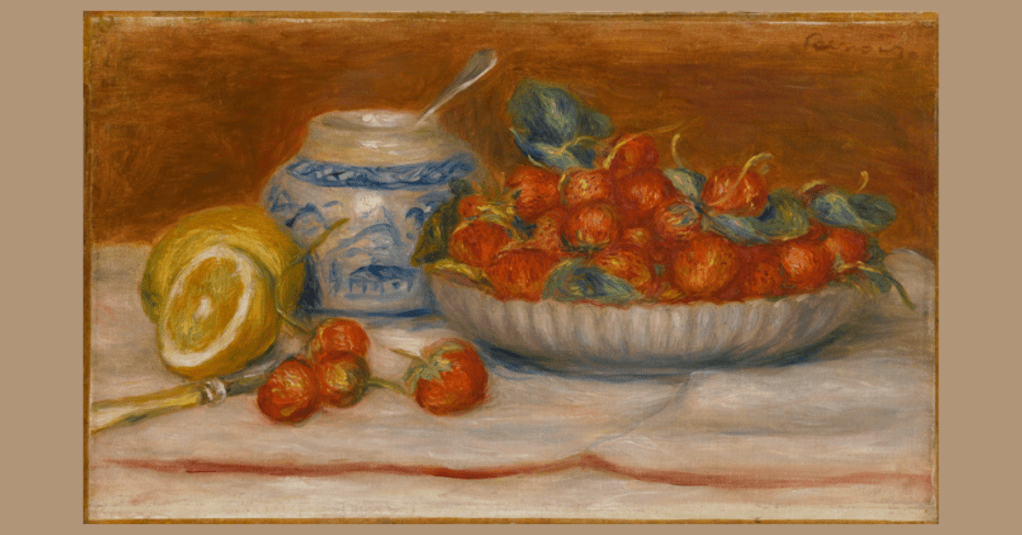
After a short bus ride, I’m at Trader Joe’s and longingly eyeing the berry display. So expensive, but I’m craving strawberries today. I buy my produce and meats, take my time browsing the cheese cooler, and linger over the pasta sauces, filling my basket up quicker than I thought I would. The cashier hands me my receipt, and I’m on my way to the bus stop, struggling to carry the big brown bags, hoping the handles don’t tear. Once I get there, I sit on a bench, peeling oranges with my hands and eating the sticky slices. Even the air tastes sweet on a day like this, and the bus is right on time.
Even the air tastes sweet on a day like this, and the bus is right on time.
When I unload my grocery bags, the purchases come tumbling out like a modern recreation of the cornucopia: a half dozen Roma tomatoes, feta, mozzarella for salads, whatever fresh vegetables caught my eye, pasta, bread, milk, and yogurt. On days when I’m feeling particularly fancy, I might splurge and buy the cheap chicken breasts at Trader Joe’s or a slightly pricier package of ground beef. I briefly stare at my bounty, a proverbial dragon atop my delicious horde, and plan out the meals for the week. Pasta salad for Wednesday (leftovers for lunch the next day), stir-fry on Thursday night, chicken wraps with friends on Friday, and sandwiches for a weekend picnic, all haphazardly noted and filed away for later.
After my day of small accomplishments is over and I’m cozy in bed, I might pick up one of my favorite cooking novels and flip through to savor a particular passage. A cross between a conventional recipe-laden cookbook and a narrative novel, these books occupy a special place in my heart. Recipes are pressed between tales of market shopping and catching fish fresh from the sea; food is described with adjectives so deliciously specific the words practically jump off the page. The simple steps of cooking become magically unfamiliar.
In comparison, my ‘replenishment Tuesdays’ and weeknight thrown-together meals seem much less romantic. I’m not shopping under the warm Tuscan sun, perusing market stalls filled with freshly picked grapes and herb-stuffed prosciutto. When I add feta to my salad in my tiny apartment, it’s not from a grassy hillside pasture in Greece, where the farmers raise idyllically pastoral sheep and make the cheese by hand. My food isn’t innovative, isn’t farm-to-table, and isn’t world-renowned. In fact, it’s easy, plain, cheap, and quick. However, what the excellent cooking novel captures isn’t contained in the gourmet kitchen of its author. I can find it here, in my small college kitchen, or back home cooking with my mom or even just indulging in a cheap bowl of instant noodles at midnight during midterm season. It’s the little things, the small joys. It’s the beauty of creation and fulfillment on a minute scale, how a good meal can give even the most despondent person a moment of satisfaction. The essence of food as a quiet joy is captured on the page and relayed to one struggling student cooking alone in her apartment.
The essence of food as a quiet joy is captured on the page and relayed to one struggling student cooking alone in her apartment.
“Cooking is destiny,” proclaims Frances Mayes, author of Under the Tuscan Sun. Her mantra reflects the major themes of this sun-soaked ode to the beauty of Italian life: food, time, and place. The novel follows Mayes and her partner as they restore an old villa in the Tuscan countryside and learn to cook with Italian ingredients. The book is filled with charming vignettes about restoration and the local people, covering everything from the ancient Etruscan water systems running beneath their estate to the local market and their favorite fruit seller. Mayes is a master of descriptive language, particularly when it comes to conveying the simplicity and freshness of the produce used. Tomatoes, basil, peaches, and asparagus are transformed by her prose, taking on a divine quality and convincing me that I should definitely stock up next time I’m at the store. Halfway through the book, Mayes includes a sheaf of the recipes she so frequently mentions, allowing the reader to inhabit a small slice of summer in Tuscany. It’s a decadent book, and I often find myself skimming through to see the chapters that discuss my favorite foods. On nights when I cook a modified version of Mayes’ risotto or tomato pasta, I like to read along and experience the joy and beauty of cooking with simple ingredients and romanticizing the small things in everyday life.
When my cravings for pasta and tomato salad are satisfied, another book might catch my eye. Tender at the Bone, by former Berkeley resident and acclaimed food critic and chef Ruth Reichl, focuses less on the place and more on personal experience. Following Reichl’s life from New York to Canada to Berkeley, we get just a taste of each part of her life before moving on to the next. Unlike Under the Tuscan Sun, Reichl weaves her recipes into the narrative. If a meal is particularly notable, the recipe is included in the following line or page. The dishes range from French cuisine to American favorites to experimental fusion, and the integration of the recipes makes the food feel like a real character in the narrative. The novel also takes pains to describe the people who create this food, illustrating the colorful members of Reichl’s family and the people she meets who inspire her love for cooking. Eccentric wine merchants, haughty French aristocrats, and chaotic communal kitchens all add texture to the novel, creating a sense of camaraderie. Anyone can cook, the book suggests, and inspiration can be drawn from anywhere. Furthermore, it’s a fun treat to see Berkeley as it was in the 1970s and 80s, with familiar locations and cultural references that envelop the reader in the time and place. Reichl’s memoir has a lot of heart. While it doesn’t quite have the same level of in-depth, dreamy description as Under the Tuscan Sun, it makes up for it in narrative development, with a sense of direction that is every bit as rich and flavorful as the recipes inside.
These books often remind me that cooking, which can sometimes feel like a tedious, thankless task, especially when I’m eating alone, is a form of creation that should be celebrated.
While I don’t have it with me in my apartment, there is one cooking book that kick started my interest in the genre. When I was about seven or eight, my dad found copies of Fanny at Chez Panisse and Fanny in France in a Goodwill near Berkeley. Both are written by famous Berkeley restaurateur Alice Waters, featuring her daughter Fanny and her famous Berkeley restaurant Chez Panisse as the central focus. Half children’s book, half child-friendly cookbook, both stories feature extensive, beautiful watercolor illustrations of ingredients, kitchens, and food that emphasize the childlike wonder of creating a meal yourself. I have fond memories of trying out the many easy recipes (most of which are light on stoves, knives, and other potentially child-unsafe equipment!) and proudly serving my parents, who were kind enough to pretend my early creations lived up to the book’s descriptions. Regardless, the recipes live up to my adult palate and are very easy and cheap–two things essential to college cooking. In terms of the narrative, both books feature small snapshots of Fanny as she travels the world and grows up around a professional kitchen. It’s a sweet, small story that relies on the beauty of food and the fun people, regardless of age, can have creating it.
These books often remind me that cooking, which can sometimes feel like a tedious, thankless task, especially when I’m eating alone, is a form of creation that should be celebrated. In a world full of uncertainty and a constant fear that I’m not achieving enough, the experience of a small meal or trip to the grocery store can satiate both my appetite and my desire to complete things. Conversations around food and what we should or shouldn’t be eating are also constantly evolving, often in contradictory terms. Don’t buy this, don’t eat that. The refrains feel endless. It’s important to remember that at its core, food and cooking can bring joy, togetherness, and comfort, even when it’s as simple as instant noodles at midnight.
FRANCES MAYES is the author of the now-classic Under the Tuscan Sun, which was a New York Times bestseller for more than two and a half years and became a Touchstone movie starring Diane Lane. Other international bestsellers include Bella Tuscany, Everyday in Tuscany, A Year in the World, and three illustrated books: In Tuscany, Bringing Tuscany Home, and The Tuscan Sun Cookbook.
Under the Tuscan Sun can be purchased here.
RUTH REICHL is the New York Times bestselling author of five memoirs, the novel Delicious!, and the cookbook My Kitchen Year. She was editor in chief of Gourmet magazine and previously served as restaurant critic for The New York Times, as well as food editor and restaurant critic for the Los Angeles Times.
Tender at the Bone can be purchased here.
ALICE WATERS is Fanny’s mother and the noted chef, restaurateur, and proprietor of Chez Panisse in Berkeley, California. She was an early advocate for the use of organic and locally grown food in restaurants, and has written a number of books and won numerous awards relating to her philosophy of food and eating.
Fanny at Chez Panisse can be purchased here.
Fanny in France can be purchased here.

 Berkeley Fiction Review
Leave a comment