“All things music & reading!”
A needle drop can make or break a scene in a film. Sometimes a well-orchestrated score is the difference between classic and easily forgettable. There are countless moving parts in a film needed to craft an immersive visual experience, aided in part by auditory components such as a soundtrack/score, or even olfactory and tactile elements like “Smell-O-Vision” and 4D screenings. A reader is tasked with developing this experience themselves. Until our favorite novels get greenlit for a book-to-screen adaptation and we’re forced to cross our fingers that they handle our comfort characters and worlds with care, we are in charge of the moving parts.
Film scores, particularly, are pre-classified in terms of genre, so you can match your current read to a pre-existing instrumental orchestration of atmosphere.
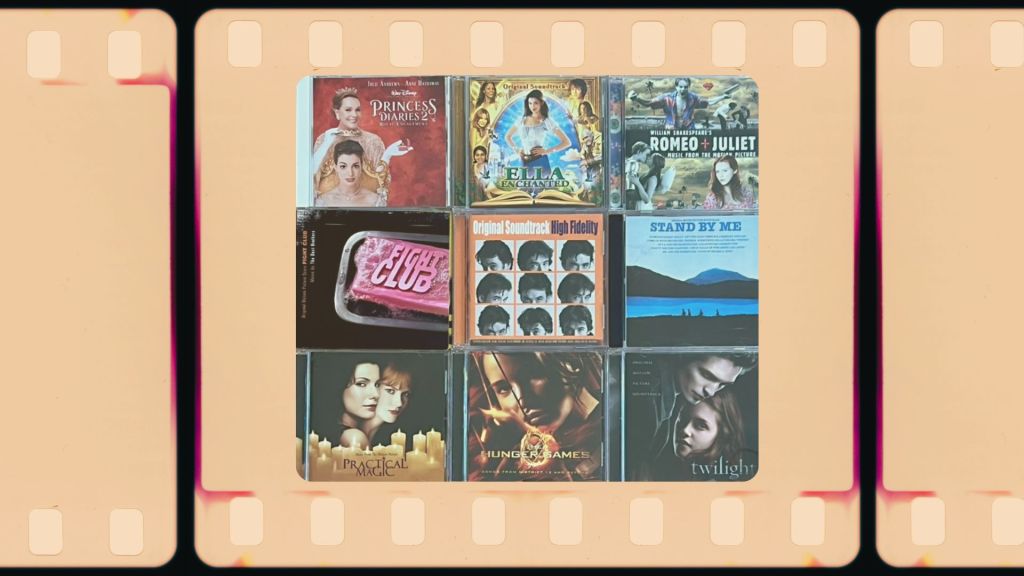
Reading with or without music is a divisive topic. Research studies have explored this idea, measuring results such as comprehension with the two varied factors. “How Listening to Music Can Help You Read” cites several studies that ultimately state music can be a helpful tool for focus, comprehension, and even simply making “the act of reading more enjoyable.” Of course, this isn’t true for everyone, and the type of music you choose is also a factor. Music with lyrics can be distracting as you attempt to absorb clashing words, visually and audibly. Strictly classical music (think Mozart and Vivaldi) is proven to boost memory and induce relaxation, but it’s an acquired taste. For all your immersive reading needs, I thus reintroduce: film soundtracks and scores. Film scores, particularly, are pre-classified in terms of genre, so you can match your current read to a pre-existing instrumental orchestration of atmosphere. Reading a mystery novel? Perhaps the score of Clue (1985) will align with the twists of your own whodunnit. Romance? Pride and Prejudice is a given, but the 2023 film Rye Lane features an electronic score that could soundtrack a modern rom-com read. “Amas Veritas” by Alan Silvestri from the Practical Magic soundtrack is the perfect segue into the semi-whimsical worlds of Ashley Poston or Erin Sterling. Practically any other genre? Chances are Hans Zimmer or James Horner have an applicable score for you. Some novels even feature their very own original music accompaniment!
If you’re looking for visual and auditory components to supplement your reading experience, look no further than ambiance videos. These videos feature (often dynamic) artwork, curated (often original) instrumental soundtracks, and/or ambient sounds such as a crackling fire or whistling wind. The rise of AI art has made it slightly more difficult to vet which videos are created by artists and not generated by hyper-specific prompts, but you can usually find the art’s origins in the channel description. Some channels that are transparent about their commitment to producing digital art with no AI include Autumn Cozy, Involving Ambience, The Alley of Ambience, and FanTasia Ambience (this channel features original compositions, artwork, and videos specifically inspired by several popular books). These are perfect for fantasy readers in particular, but the more generally “cozy” videos and accompanying soundtracks are relaxing for any novel.
Soundtracking our reading in various ways can enhance the experience, much like the task of creating a playlist after you finish a book allows you to extend your time with the characters and world.
Soundtracking our reading in various ways can enhance the experience, much like the task of creating a playlist after you finish a book allows you to extend your time with the characters and world. In recent years, some authors have taken to providing their own playlists before (or after) the book. Sometimes it’s a fun way to see what an author was listening to while writing the novel, or perhaps it helps to reinforce how they view their written characters. Other times, it feels like the same few songs are circulated through different books, and they start to lose their novelty as they are applied to more and more characters. What once seemed like a unique feature now feels like a commercialized tactic. As a result of “BookTok,” books are often marketed by one-word tropes rather than full descriptions, and the rise of a “front-page playlist” seems to be related. At times, it feels like an author is purposefully referencing a song in order to capture a wider audience, rather than expressing a genuine connection to it. Perhaps a character’s fictional playlist provides a relatable point of reference for readers, but more often than not the real song’s acknowledgment can be jarring and take you out of the world being shaped. There is a way to make interspersed song references well-integrated and powerfully relevant to the story at hand, but the question remains: are the newer methods of infusing your novel with music less about characterization and grounding, and more about appealing to the masses?
For much longer than the existence of a front-page playlist, a literary “needle drop” has been a great way to immerse a reader into a novel, while grounding them with something familiar from their own world. In The Perks of Being a Wallflower by Stephen Chbosky, referenced songs become an important way to understand Charlie and his developing friendships. In Love is a Mixtape by Rob Sheffield, periodic mixtapes precisely soundtrack Sheffield’s love story. Just like in film, the integration of a needle drop can be consequential. Some modern romance novels name-drop popular songs as if the main character is listening to them, which is sometimes a fun gimmick but doesn’t necessarily help to seamlessly shape the story’s developing literary world.
Most forms of art, especially music, film, and literature, are intrinsically tied, and the merging of artistic worlds is often exciting and further immersive.
Despite these critical considerations, it’s undeniable that music and reading have a reciprocal relationship. One informs the other, becomes a point of reference/allusion, or adds a new perspective. Most forms of art, especially music, film, and literature, are intrinsically tied, and the merging of artistic worlds is often exciting and further immersive. Though the methods of this crossover vary, and perhaps your opinion of reading while listening to music is different, we have the ability to choose how we soundtrack our experience. Whether you cherish a front-page playlist, prefer to make your own as an extension of your love for a novel, pause your reading to ground yourself with an integrated song, or choose to envelop your experience with an ambient auditory environment, music can enhance our reading in a variety of ways.
Soundtrack Your Reading!
If you like science fiction novels, try:
- TRON: Legacy (Original Motion Picture Soundtrack) by Daft Punk
For a tense, introspective sci-fi novel, try:
- The Social Network (Soundtrack from the Motion Picture) by Trent Reznor and Atticus Ross
If you like horror, try:
- IT (Original Motion Picture Soundtrack) by Benjamin Wallfisch
If you like historical fiction, try:
- Little Women (Original Motion Picture Soundtrack) by Thomas Newman
If you like coming-of-age stories, try:
- Mid90s (Original Music from the Motion Picture) by Trent Reznor & Atticus Ross
If you like action/superhero plots, try:
- The Amazing Spider-Man (Music from the Motion Picture) by James Horner
If you like fantasy, try:
- The Spiderwick Chronicles (Original Motion Picture Score) by James Horner
If you like moody mysteries, try:
- Twin Peaks (Soundtrack From) by Angelo Badalamenti
For a lighthearted rom-com or wholesome adventure, try:
- The Grand Budapest Hotel (Original Soundtrack) by Various Artists

 Berkeley Fiction Review
Leave a comment