
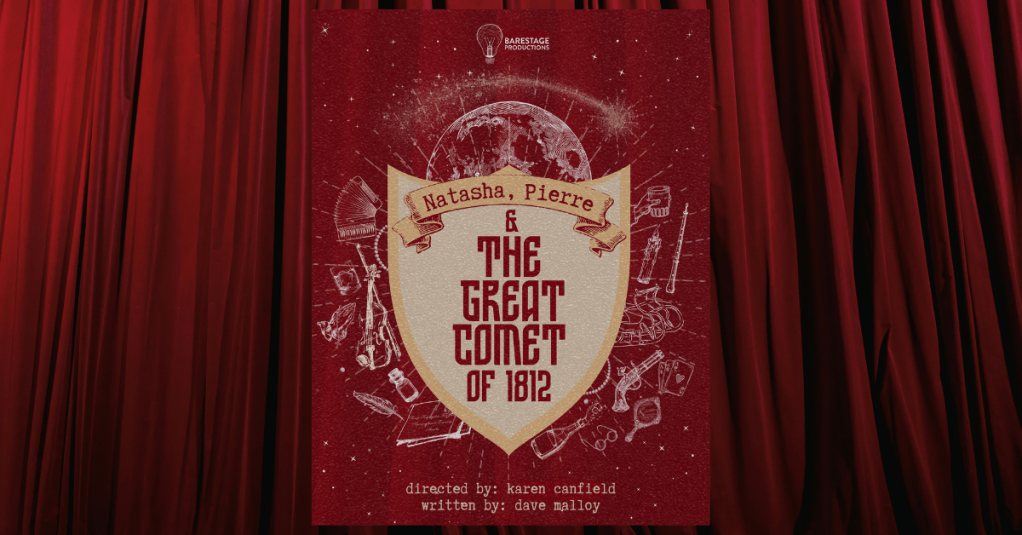
After wandering the UC Berkeley campus in search of a place to record, Karen Canfield, (director of BareStage production Natasha, Pierre & The Great Comet of 1812) and I settle into a building every English major is extremely familiar with: Wheeler Hall. We find a quiet alcove on the top floor and begin our conversation. (The interview has been edited for clarity).
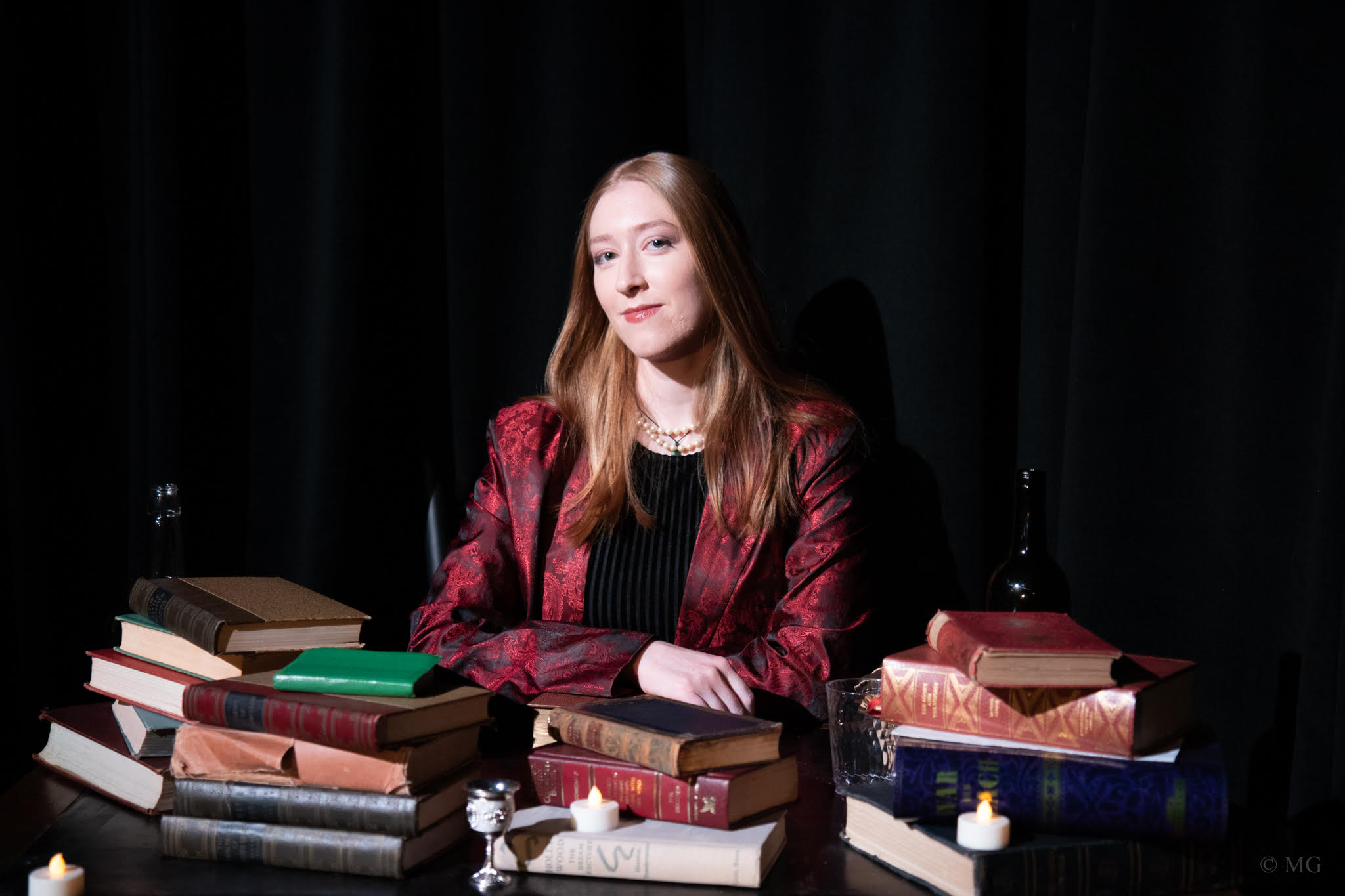
Joshua Dean: To start off, can you give a synopsis of the play for anyone who might be unfamiliar?
Karen Canfield: It’s basically a sung-through musical [told entirely in song] based on about 70 pages of War and Peace. It is described as an electro pop opera, so the music is very, I guess you could say, mixed genre. It kind of goes from Russian folk music to electro pop to musical theater and operatic styles, and it’s really fun and challenging music.
It follows the story of Natasha, who moves to Moscow with her cousin Sonya to wait for her fiance Andrei to return from the war. But while she’s in Moscow, she gets tangled up with the very charismatic Anatole, and her reputation is threatened. And Pierre, who is friends with Anatole, is searching for meaning in his life.
He’s very sad. He feels like he’s not doing anything with his life. So it’s very relatable for a lot of people. And he has to help save her reputation. And in doing so, they save each other. It’s a really beautiful story.
Joshua Dean: And how does the Comet fit into this?
Karen Canfield: It’s revealed in the last song how the comet fits in. You kind of have to come see it to find out.
It’s able to weave together these different narrative threads that in the book would be done through omniscient narration or kind of narrative foreshadowing. The music is able to do that work in a different way that’s kind of more subtle and exciting.
Joshua Dean: How do you think the musical’s theatrical setting expands on the existing storyline from the novel?
Karen Canfield: I think it’s interesting because in this musical, the composer, Dave Malloy, really wanted to embrace Tolstoy’s use of language. So a lot of it is taken sometimes word for word from one of the English translations of War and Peace. And that translation adds a whole other layer because, of course, it’s originally in Russian.
But there’s this kind of Tolstoyan quirk to the language. Characters often narrate each other and themselves and their own actions, which is really unique for musical theater in general. And so that kind of adds this extra, almost meta-theater layer to it and kind of blends and warps our perception of the fourth wall.
In my opera class, we talk a lot about how the music adds another language to the storytelling. And I think in Natasha, Pierre & the Great Comet of 1812, the music is very essential to the storytelling, in that the different characters have their different motifs. There’s songs that have little musical motifs that call back to other songs or other characters to kind of show the characters’ relationships across the story.
And so, it’s able to weave together these different narrative threads that, in the book, would be done through omniscient narration, or a kind of narrative foreshadowing. The music is able to do that work in a different way that’s kind of more subtle and exciting.

Thinking in comparison to, say, a film adaptation, which would probably try to be more realistic and naturalistic, the medium of theater, being more abstract and metaphorical, has more freedom to kind of play around with the abstractions in a piece.
And things like colored lighting that, you know, wouldn’t be naturalistic in a film and would have a different effect, in the theater creates a very specific mood. And, you know, I will tease a little bit that we do have a comet, but it’s kind of abstract and you might not think at first that that’s what it is until the very end. And our lighting designer has absolutely killed it with the comet.
In our production, it’s a very non-traditional space. We’ve put the orchestra pit in the middle of the stage, and then built a stage around them so that the music is front and center. The performers also move in and out of the audience and the aisles in a way that tries to break down that audience stage separation.
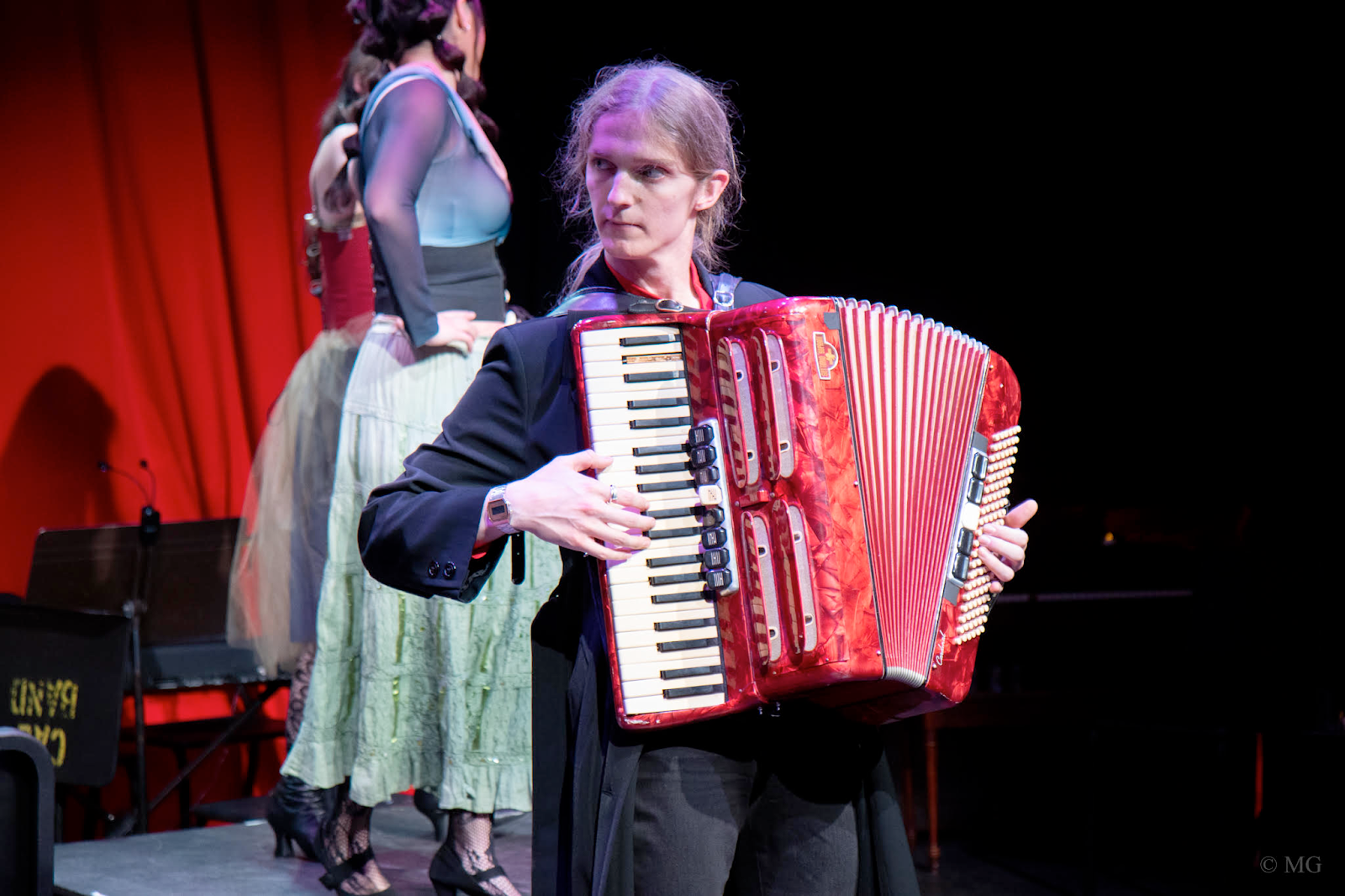
So really, my goal with this production has been to bring the audience into the action. It’s such a close and intimate space already. Leaning into that has been really rewarding, in that some of the audience seating is almost on stage, and actors will sit next to you if you’re sitting in a certain spot. And it’s super fun to have the opportunity to see the show from all of these different perspectives.
Joshua Dean: What has been notable about your experience directing this musical? Did you have a personal connection to this musical going in as the director?
Karen Canfield: So this is my first time directing ever. And it’s been, especially in the beginning, very daunting, because my past experience with theater has always been as an actor. I’ve done a few things as a choreographer, which is a little bit similar to directing, but on a much different scale.
And Great Comet is a ginormous show. Like, it’s a really big show. Just by the nature of it being sung-through. There’s so much music to cover. There’s so much action. There’s so many different characters. There’s 10 named characters in the musical, plus an ensemble.

So it’s a lot of moving parts, and then there’s all the technical elements to deal with, like lighting and sound and costumes and set design. And that was all kind of newer to me. But it’s been an extremely rewarding process, because just getting to work with so many different talented people to shape the story and to bring it to life has been so amazing.
And really, everyone involved brings something different to the table. Each actor brings a different flavor and experience, and then we shape the characters together. As a director, that’s been really rewarding to experience that level of collaboration in a new way.
And I do have a personal connection to the show, in that I discovered it years ago when a voice teacher of mine was like, “oh, here, let’s work on this song,” which was one of Natasha’s songs.
And it was one of the hardest songs I’d ever worked on because, again, the music in the show is so challenging, but it was beautiful. And I went and I listened to the full Broadway cast record, and I was just immediately struck by how different it was from anything else I’ve listened to.
It was so strange. And the narration quality that I talked about earlier, like, added such a different flavor to it than any musical I’ve listened to before. Oftentimes the rhythms will be irregular and the keys will change, modulate up and down, all over the place. So you kind of have this weird, disorienting narrative flow to the music.
And I just thought it was fascinating, and then thematically as well, there’s so much going on in the story that really fascinated me. So I was really excited to pick out those threads and explore the story in this capacity.
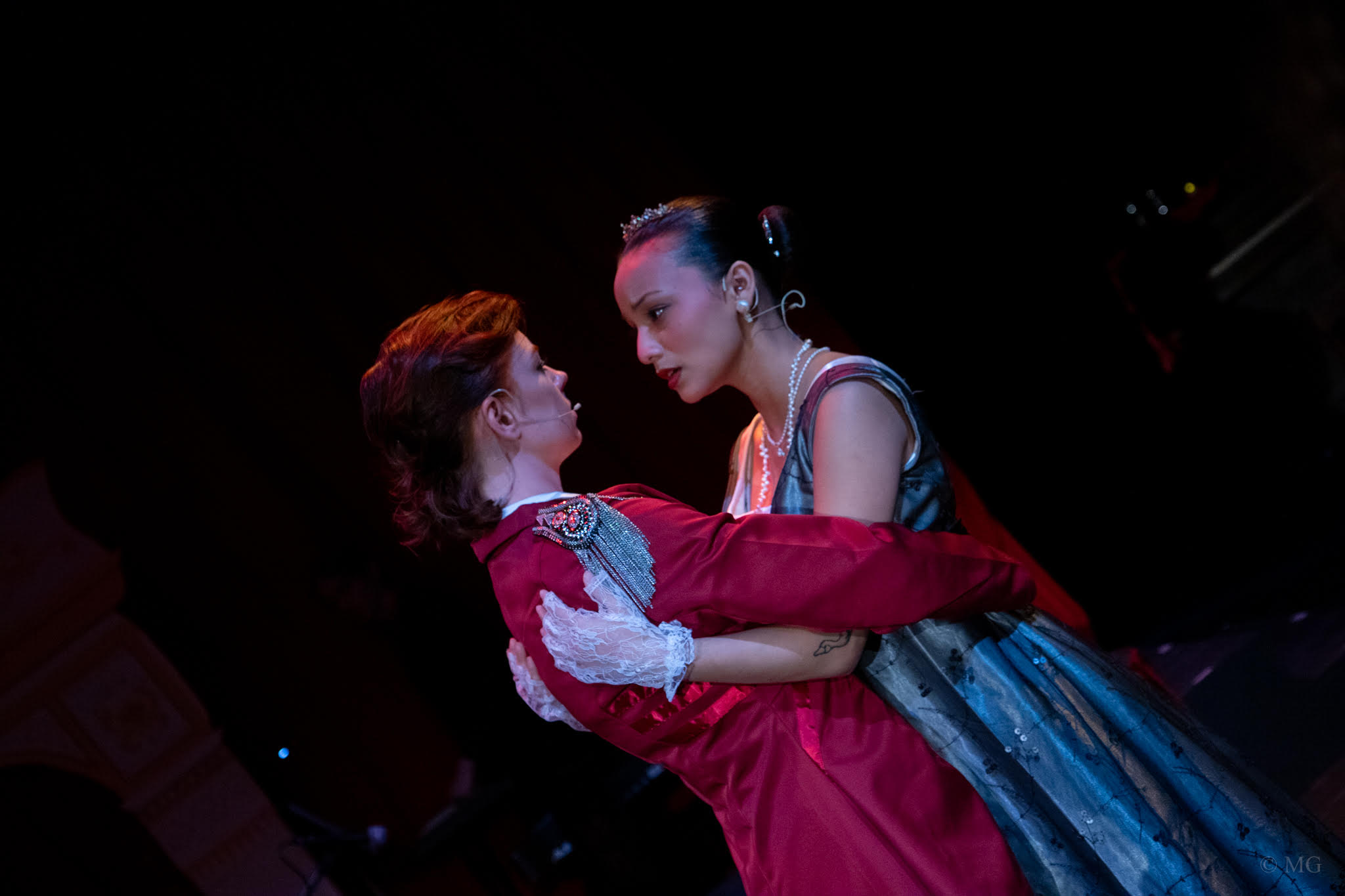
Joshua Dean: So the musical is almost entirely sung-through, except for one single monologue spoken. Do you think that choice is the right amount of dialogue?
Karen Canfield: I think that it’s kind of perfect the way it is, because the way that it works is that because it’s all sung-through, you get used to just everything being sung. It’s kind of like, if anyone’s familiar with Les Miserables, the musical, that one’s also sung through, except for maybe a sprinkling of dialogue or single lines.
It’s like everything is being stripped away. And he can’t hide behind anything. He can’t hide behind the music because there is no music. And so it’s just fully baring his soul. And it’s so powerful because of that.
I’ve heard it compared to an opera, in that it’s sung-through. But Great Comet is interesting because you get used to it being sung-through. Like, you get used to everything being sung with no dialogue. And then suddenly at the end, you have this very intimate and vulnerable scene, and suddenly the music stops, and this character has this one short little monologue that’s so raw and vulnerable.
It’s like everything is being stripped away. And he can’t hide behind anything. He can’t hide behind the music because there is no music. And so it’s just fully baring his soul. And it’s so powerful because of that. And it’s often shocking when you first encounter it, because, you know, you’re like, “oh, yes, they’re singing this music and then suddenly someone’s speaking,” and it’s like, “whoa, what’s going on?”
It just makes your whole attention zoom into that moment. And it’s a beautiful, beautiful moment. It’s like, one of the turning points of the musical, thematically, emotionally and also for the characters involved.
Joshua Dean: Oh man, I need to go see this.
Karen Canfield: You have to come see this.

Natasha, Pierre & the Great Comet of 1812 performs for one more weekend. Get your tickets at https://secure-tickets.berkeley.edu/26006. For more information, please visit the BareStage website.
Karen Canfield is a senior at UC Berkeley studying English and Creative Writing. She is a singer, writer, performing artist, and director from Southern California.
Joshua Dean is an English major and Assistant Publicity Editor at Berkeley Fiction Review
Maude Gull is a final-year graduate student in the UC Berkeley Astronomy Department. During her graduate studies, she has been a stage photographer for Barestage, photographing 16 of their productions over the last five years, and a photographer for the Cal women’s basketball team. Her work can be found here: https://www.flickr.com/people/140922687@N06

 Berkeley Fiction Review
Leave a comment