
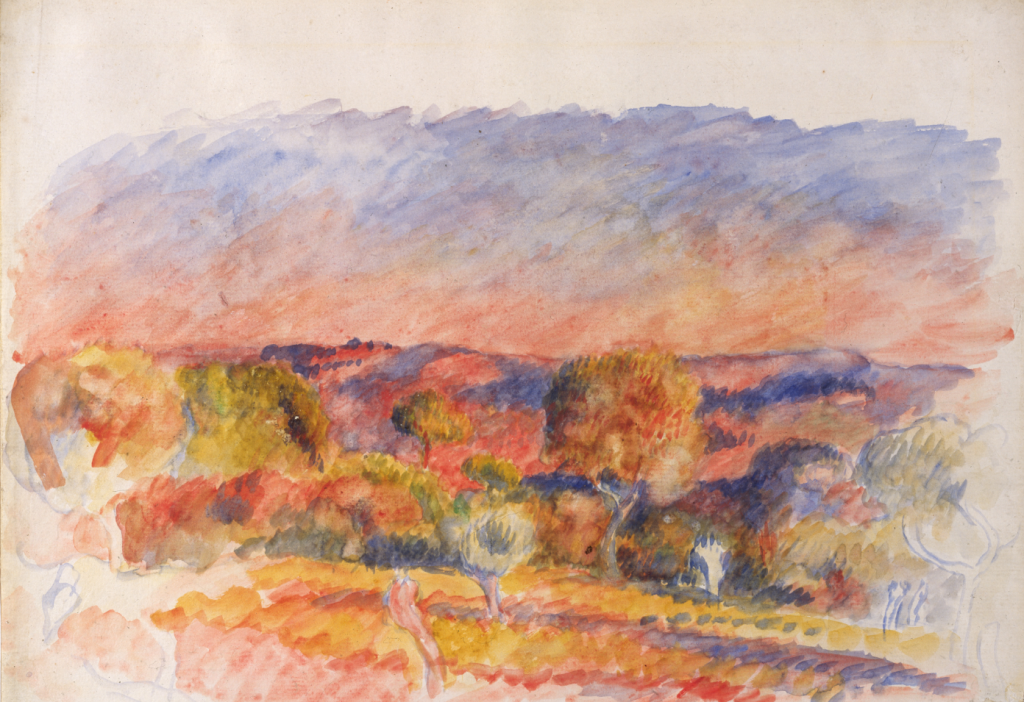
I used to think that we live in our own bubbles. People around me have a shell around them that prevents me from hearing their voices in their heads and seeing the world the way they see it. Only in brief moments with close friends do the bubbles come close enough to touch each other. Otherwise, I am alone–side by side, alone.
I wouldn’t call it loneliness, because the word implies something temporary. Rather, it felt like a condition of living that I could never escape. A feeling that, although I had people around me, they would never see the world like me. Perhaps one could call it solitude.
I’ve never had that feeling as strongly as the summer two years ago. I was alone in my hometown, waiting for my studies to start while all my friends were out of town. I did dishes in a cafe, only having brief conversations with my parents during breakfast and dinner. Slowly, I started to feel that no one could enter my bubble.
That summer was also the summer I read The Book of Disquiet by Fernando Pessoa (1888-1935). I’m not sure whether the book came first or the solitude, but I’m certain it intensified the feeling. There was something particularly introspective about Pessoa’s writing that made his thoughts seep into my perspective.
Pessoa’s book is a disordered collection of diary notes by the partly autobiographical character Bernardo Soares, a bookkeeper in Lisbon. His entries are condensed moments of alienation, detached from events, rummaging through his thoughts. Each entry is filled with existential ideas that I could spend a day contemplating. I would read a page and then gaze at the room for twenty minutes while processing what I had read. I lived in this book for two months, unable to read more than three pages a day. I became Soares.
I lived in this book for two months, unable to read more than three pages a day. I became Soares.
Like me, Soares feels detached from the outside world. He even feels detached from himself, as if looking at himself from the outside. He sits alone in restaurants, observes people around him, writes his thoughts on napkins, and never initiates a conversation. Even when he talks to others, he feels alone. Because Soares knows he will always be alone in his experience and will never be able to share it: “Most people are no more for us than scenery, generally the invisible scenery of a street we know by heart […] No, others don’t exist… It’s for me that this heavy-winged sunset lingers, its colours hard and hazy.” It was so depressing to read that quote, to think that the world only existed for me, but it confirmed something I had started to feel.
Like Soares, I started to meet people without feeling like I was with them. I felt like the world was occupied by eight billion Bernardo Soares’s, each in their own world, side by side, alone. I started to even distance me from myself, feeling how odd it was to have a voice in my head. And when I figured that Pessoa’s idea was inherent in existence, I gave up trying to share my memories with others. I got quiet and reflective, never telling people about my life because they would never see it like I did. After biking in Provence or watching the fireworks along the pier in Venice, Italy, I didn’t show anyone pictures or tell them about it but tried to enjoy the fact that it was only meant for me. When people asked me how I was doing, I only answered briefly. I didn’t want anyone to reach me because I felt like they never could.
Soares made me lose hope in conversation. He believes there’s a gap between what people say and what they feel. Conversations cannot bridge the gap between two minds:
“They speak, they tell, but it’s not of themselves that they speak or tell; they’re words, as I’ve said, that don’t disclose their meaning, but they allow glimpses. In my twilight vision, I only vaguely distinguish what these sudden glass panes on the surfaces of things let show from the interior that they veil and reveal. I understand without knowledge, like a blind man when someone tells him about colours.”
The quote told me that not only would no one understand me, but I would never understand others. Conversations cannot represent another person’s mind but only give you a glimpse. There is something inherently personal about your experience that is impossible to translate into words. What was the point of conversing, then? I asked myself. And suddenly, I became a lot quieter.
Reading Pessoa, I started to believe that a dialogue is just two monologues streaming toward each other without ever meeting.
Reading Pessoa, I started to believe that a dialogue is just two monologues streaming toward each other without ever meeting. Pessoa writes that we are so lost in our attempt to convey our experiences to others that we forget that other people exist and don’t listen to them. Conversations started to feel like bartering, where I got ten minutes to talk about my troubles in return for the other person getting ten minutes to talk about theirs. A mutual egoism, where we don’t care about each other, but only tolerate the other’s talking because both get to express their thoughts. I felt like we were all talking to ourselves, with someone beside us.
Still, I couldn’t stop hoping that I could connect with others. Now and then, in conversations with close friends, I did feel like my life was not just mine. As if I was not the only one experiencing it.
I remember one time that summer when I wandered in the streets with a good friend and completely opened up. When my friend opened up in return, and I felt her frustrations, and she felt mine, it was as if my thoughts became hers, and her thoughts became mine. We thought so similarly that it felt like we had lived our entire lives together, even though we had only known each other for a few months. And when we strolled down the river on a beautiful day in June, it wasn’t just me hearing the ripples in the waterfall and seeing how the sun creates reflections in the trees. The world belonged to both of us. It was as if we were one. As we hugged goodbye at the tram station, I wished I had two extra eyes in my pocket that I could give to her and that she had two for me so that when we let go and went separate ways, the feeling of unity wouldn’t end, but we would continue to see the same thing.
Now and then, I had moments like these that made me question whether Pessoa was right. It was sad that these moments were so rare and short and would be replaced by my solitude, but they still happened, and they made me hope that conversations didn’t have to be two monologues. Was it really, as Pessoa writes, impossible to achieve a “true penetration” into another person’s mind, if only for a few hours?
Reflecting on my moments of shared reality, I realized that it doesn’t matter whether I reach another person’s experience. I can never tell whether my friend sees the streets like me because I can never get out of my perception, but I can have the feeling that I do. Deep down, we have similar feelings that seemingly can transcend each other’s bubbles. And perhaps life is all about pursuing those relationships, no matter how false the feeling is. To have conversations where you get that sensation.
As the summer ended, I finished The Book of Disquiet and left it on the bookshelf.
As the summer ended, I finished The Book of Disquiet and left it on the bookshelf. The orientation week at the university started, and I began to think less. I was so immersed in my studies, the dancing, and the people that I forgot I even had a self.
Looking back at the summer, I felt like I had lived in a fever dream. Pessoa writes that Soares is a damaged version of himself, with feelings he had but intensified and without rationality. Perhaps I also had been detached from rationality, unable to see beyond the tip of my nose. I understood that if you live too much on your own, you will feel the self in you so much that you feel trapped in it. By surrounding yourself with people that make you forget you are there, you can escape it and create memories that feel shared.
Fernando Pessoa (1888-1935), the Portuguese poet, literary critic, and essayist, is one of the most significant literary figures of the twentieth century. He was born in Lisbon and brought up in Durban, South Africa. He returned to Lisbon in 1905. A prolific writer, ascribing his work to a variety of personas or heteronyms, Pessoa published little in his lifetime and supported himself by working as a commercial translator. Although acknowledged as an intellectual and a poet, his literary genius went largely unrecognized until after his death.
The Book of Disquiet can be purchased here.

 Berkeley Fiction Review
Leave a comment