
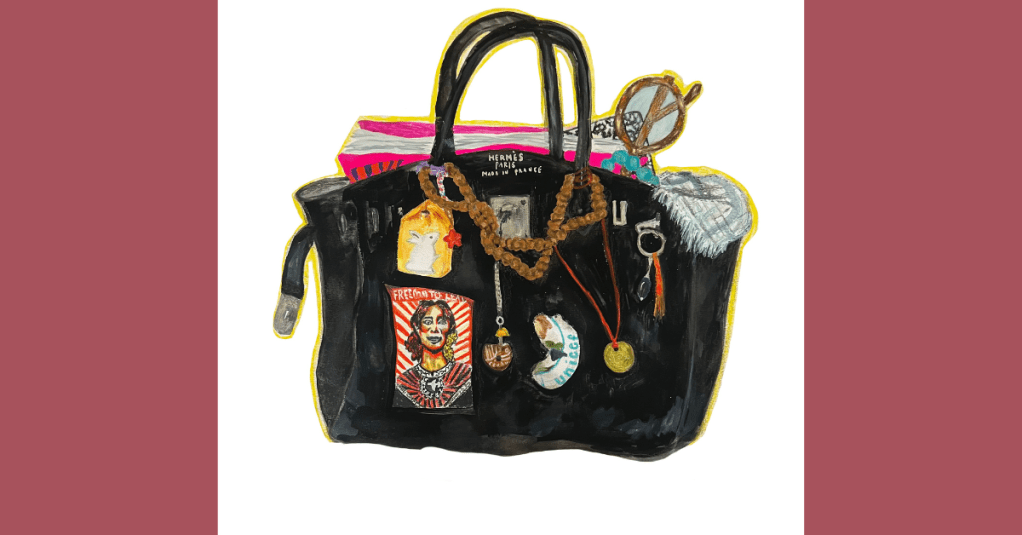
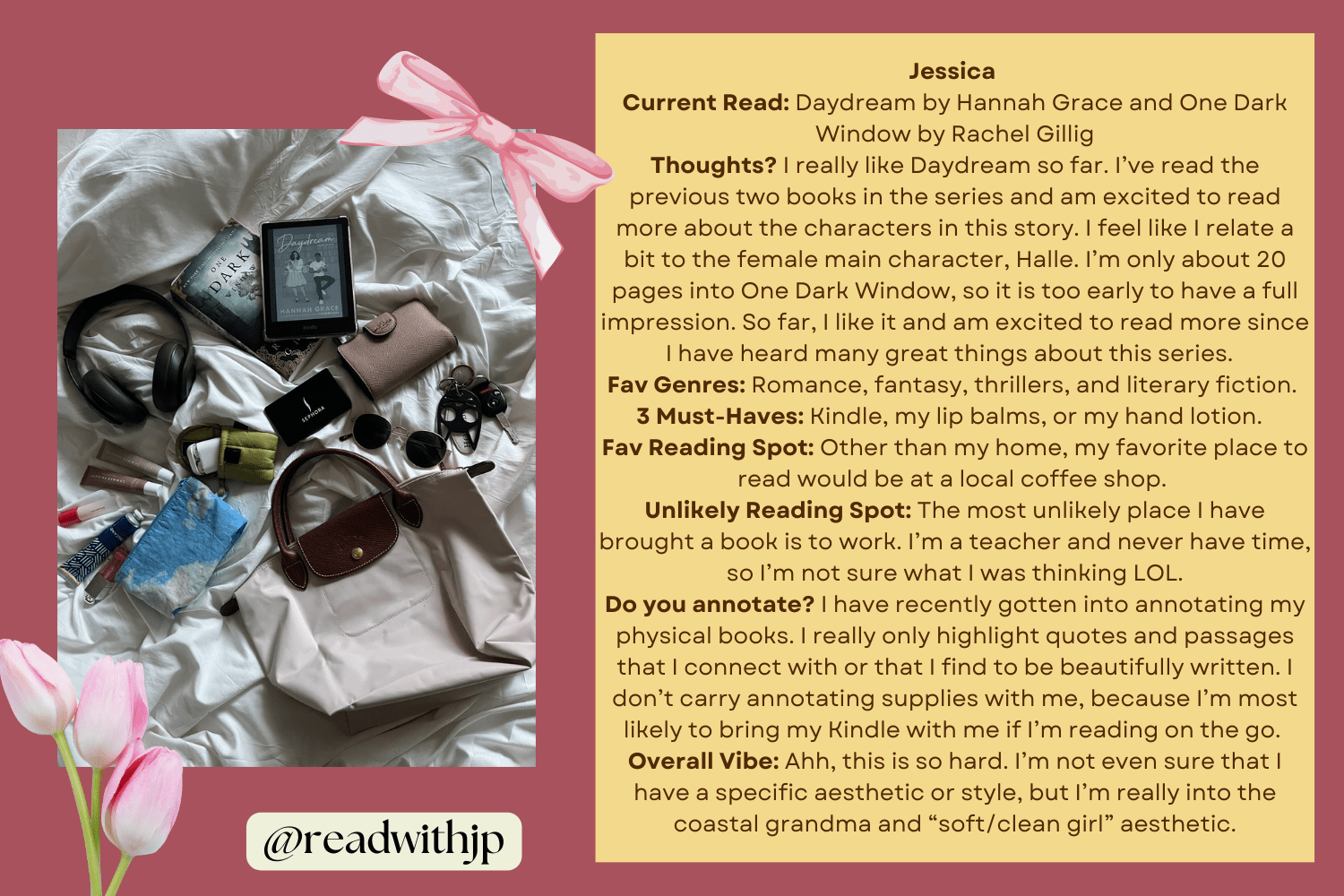
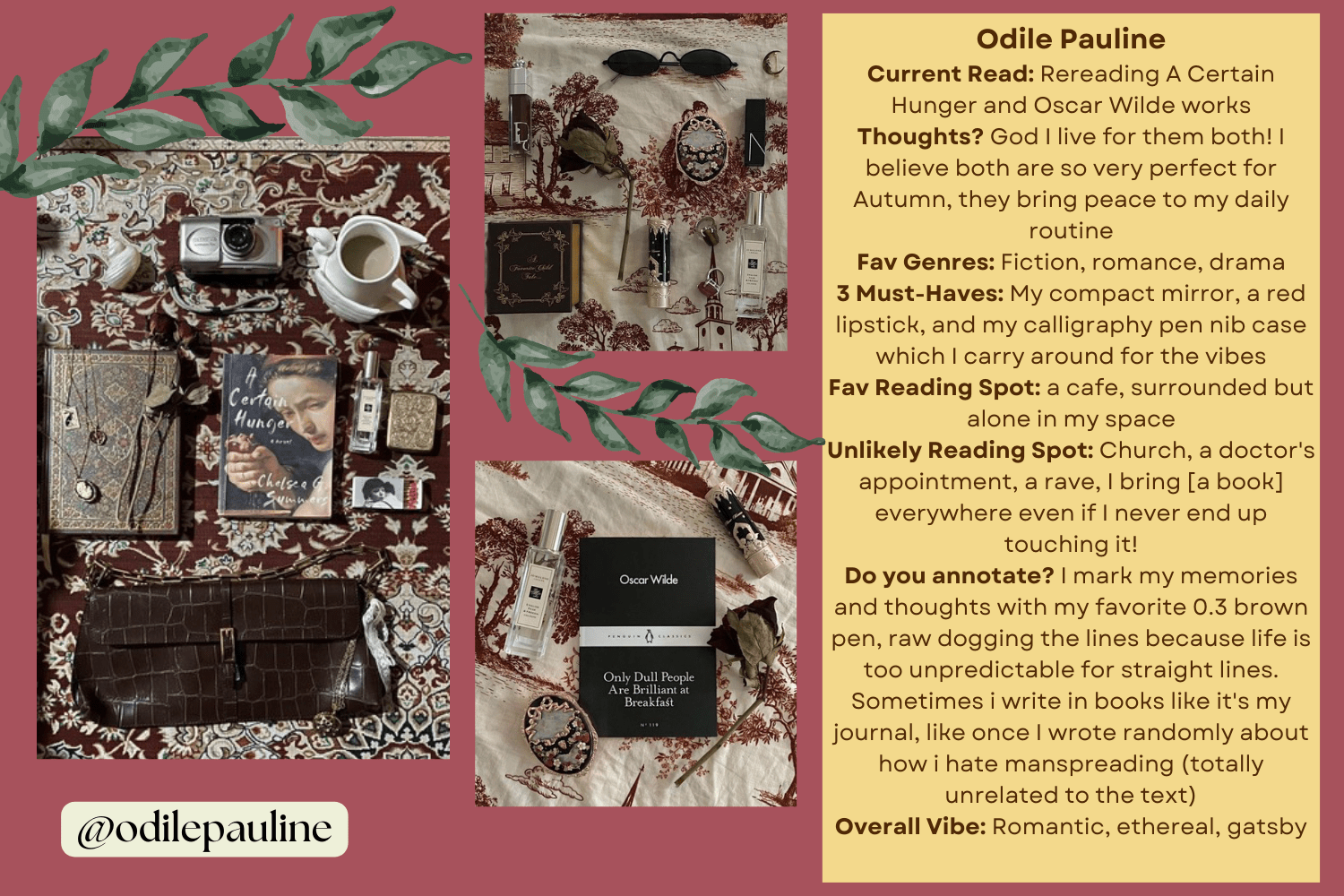
Shakespeare’s work often reinforces the spiritual belief that “eyes are the window to the soul.” I beg to differ. A more intuitive insight into someone’s inner life? Their bag. A book lover’s bag, specifically, is a narrative in and of itself. I almost always have a book with me. Do I read it while I’m out? Sometimes. I simply like knowing that I can take it out at any given moment and busy my mind. The contents of my bag often reflect an inadvertent extension of my chosen book itself.


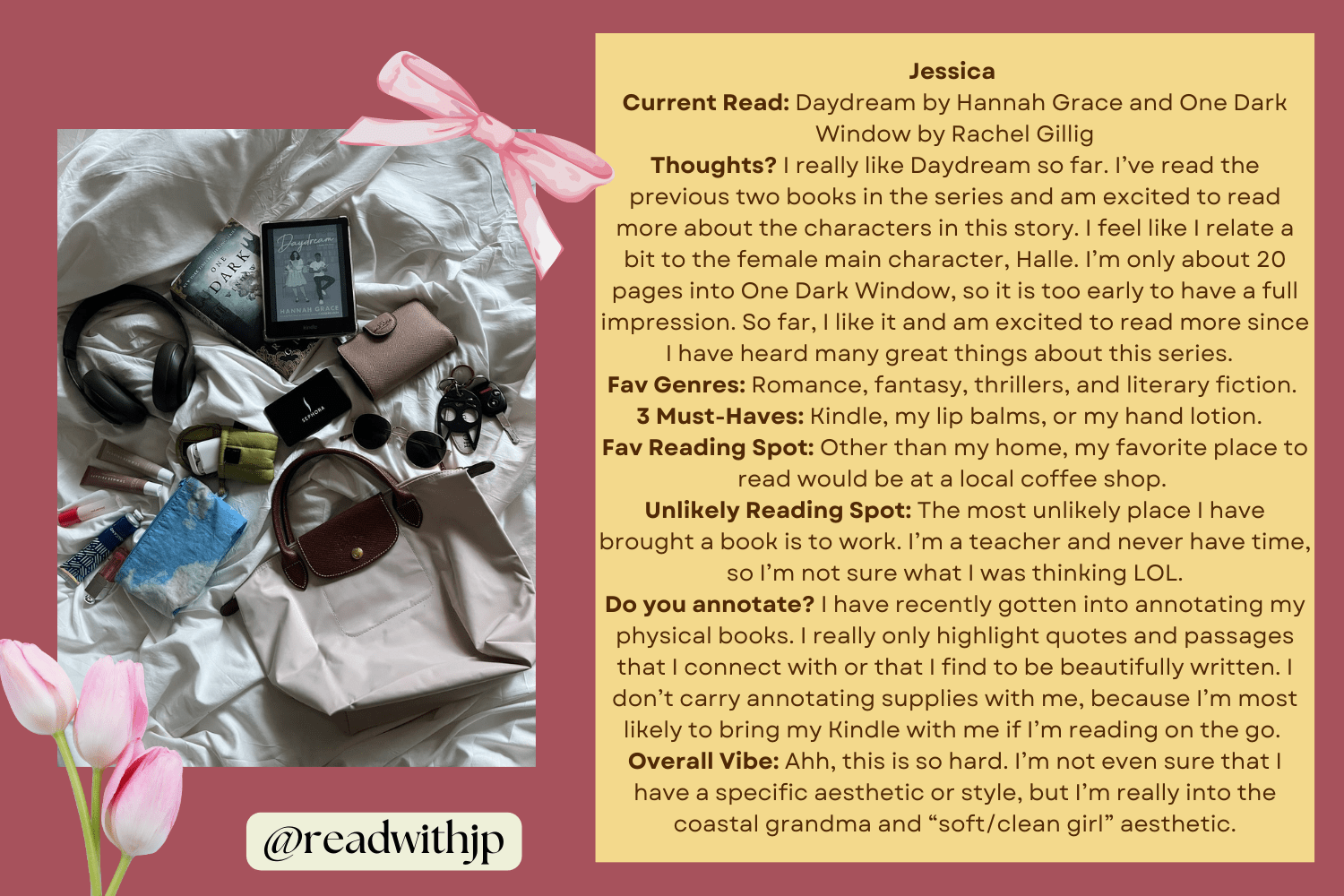


A more intuitive insight into someone’s inner life? Their bag.
On my first trip to Yosemite, I didn’t know what to expect. I figured my family and I would hike up to the top of a waterfall and have a refreshing, scenic space to unwind for an hour. So I brought a book. The Shining, to be exact. I envisioned a tall forest as the perfect place for a book about isolation-driven madness. Somewhere in my backpack between a water bottle and a granola bar, was this 400+ page book (and two backup books, I’ll admit), and needless to say, it was not a good idea. We were halfway up the trail when my mom realized my backpack was abnormally heavy. I made it to the top, but of course, there was no designated “Reading Area” to be found.
Other times, traveling is more conducive to a book lover’s lifestyle. On a trip to Europe, I visited Waterstones and purchased two books with UK-exclusive covers. I attempted to read on the Tube ride back to my hotel, but the jet lag was affecting my focus. In preparation for the next leg of our trip, my grandma gladly packed my books in her 80 lb., See’s Candies-filled suitcase. The 1,000-page book I had brought from home stayed untouched underneath my folded clothes, but my two new books accompanied me to each subsequent Italian city. Plane, train, car, ferry. Eventually, I cracked open my copy of Shirley Jackson’s Dark Tales atop “Castello Brown” in Portofino. This time, my brisk walk to the top was rewarded with a perfect reading environment: a castle courtyard overlooking the water, and the promise of prosecco.
On a day-to-day basis, I change my bag as often as I cycle through books. My general requirement for an everyday bag is that it can fit a hardcover book. Tote bags with designated book pockets are the best of the best. I rarely annotate; if I do, it’s with pastel sticky tabs and erasable highlighters because I can’t fathom making a permanent mark on the page, unless it’s a book for school. Rogue tabs with diminishing stickiness line the bottom of every bag I own. One of my most used tote bags displays a collection of buttons and pins from various bookstores and festivals, serendipitously reflective of the genres I tend to gravitate towards, such as music memoirs and a sprinkling of fantasy. Bookmarks are a physical memento all by themselves. I can gauge my enjoyment of a book based on what I reach for to mark my place; a receipt is typical, but a gift card or a pen means I’m in a blissful, rushed reading haze. The books on my shelves envelop these reminders. They contain ferry ticket stubs, business cards, and ripped sketches born out of boredom. Even after a book no longer necessitates a bookmark, I can’t bring myself to remove the relics of their reading experience.
I can gauge my enjoyment of a book based on what I reach for to mark my place; a receipt is typical, but a gift card or a pen means I’m in a blissful, rushed reading haze.
My backpack for school is typically overloaded with a variety of assigned books. Throughout my freshman year, however, I made an effort to bring a personal book and use the inefficient gaps in my schedule to get in some reading for enjoyment. My second semester was particularly music-oriented all around. Each day, after getting caught up on work for my asynchronous “Music in American Cultures” class, I’d retreat to the Faculty Glade to read Rob Sheffield’s Love is a Mixtape. Naturally, reading about mixtapes warranted listening to the accompanying mixtapes Sheffield provided, so wired headphones were my most consistent accessory.
Since my first year at Cal, I’ve walked through campus unexpectedly equipped with an assortment of perfectly paralleled reading accessories. My black sunglasses have complemented an array of Joan Didion’s essay collections, my small, pink sticker-covered Kindle has allowed me the opportunity to step away from analysis-driven reading on a bright, sunny day, and my favorite pen has cramped my hand from mulling over Toni Morrison’s rich prose in Morrison Library’s worn leather chairs. Just like the unintentional narrative of a reader’s bag, every memory of a reading environment and experience is a composition of each seemingly arbitrary factor. A book conveys more than just the story on the page; it has the ability to construct a moment, illustrate a feeling, and epitomize a personal aesthetic.
Just like the unintentional narrative of a reader’s bag, every memory of a reading environment and experience is a composition of each seemingly arbitrary factor.
One of the best examples of a book lover’s bag encapsulating the narrative quality of their owner’s individuality is the late actress, singer, and fashion icon, Jane Birkin. Her namesake bag is famously an example of genuine use and incidental literary prowess. In the 1988 French essay film, Jane B. par Agnès V., Birkin dumps the contents of her well-worn bag (complete with a copy of Dostoevsky’s The Gambler and a mound of half-written pages) onto the concrete steps. She faces the camera and proclaims that “when you show it all, you reveal very little.” Even so, it’s undeniable that Birkin’s free-spirited approach toward accumulating “stuff” in a bag typically kept pristine by wearers is inspiring and evocative of the same narrative quality we all accidentally adopt. She addresses the audience once more, asking: “Do you know me any better now?” But that’s for you to decide.





 Berkeley Fiction Review
Leave a comment