
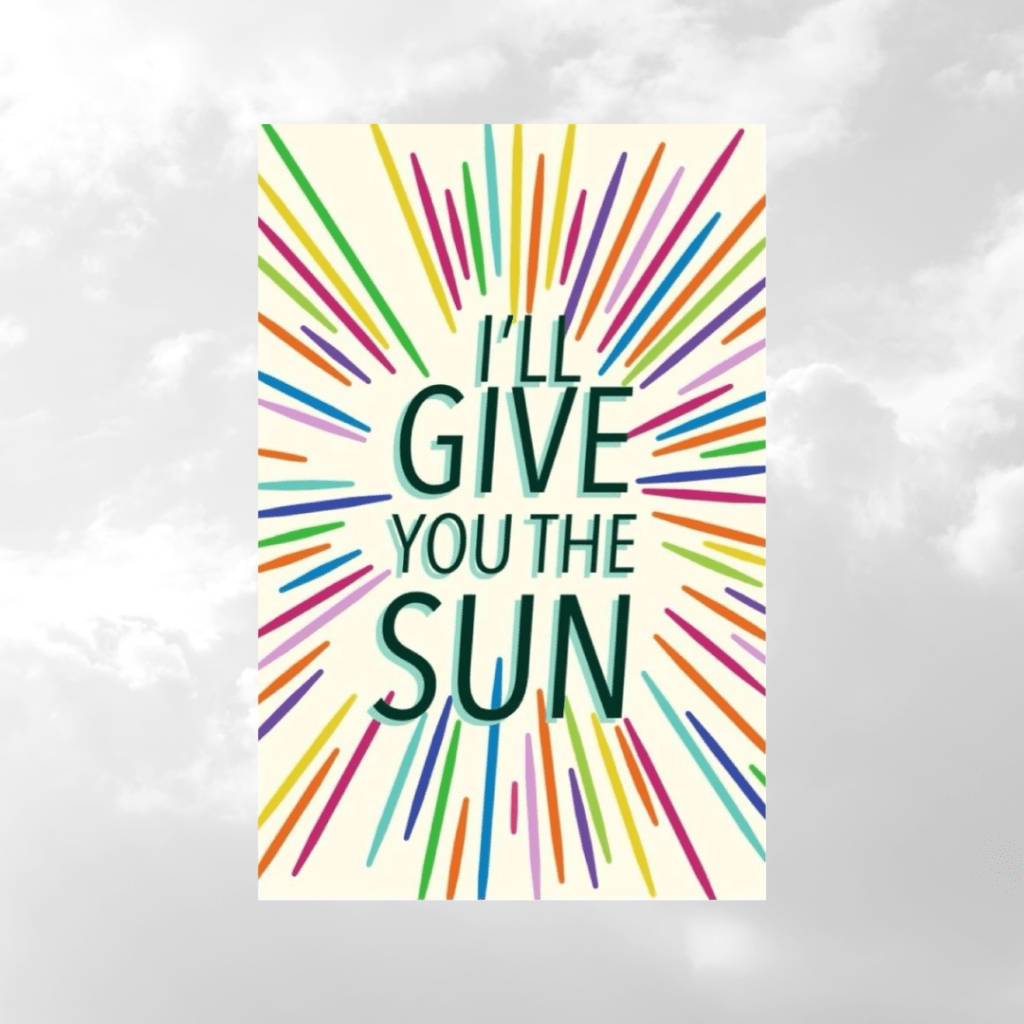
Reading today can feel like a race. Have you read this one yet? Ten chapters before next class. How many books did you log on Goodreads last year? There’s pressure to consume books faster, to analyze and synthesize and summarize, and while those things undoubtedly lead to new knowledge and growth, the pressure can also be demoralizing.
How to fix it? I suggest re-reading an old favorite.
Last month, in need of a break, I decided to pick up my worn copy of Jandy Nelson’s contemporary YA novel I’ll Give You The Sun. When I started to read the first page, margins packed with years of annotations, it was startling: I felt as though I had been drawn forcefully back to the overcast afternoon in sixth grade when I first read the book. I could practically feel the rough upholstery of my old living room couch, and smell the scent of daphne drifting through the open window.
As I read, every sentence painted the same vivid picture in my mind that it did seven years prior. The book’s electric prose told in chapters alternating between Noah’s narration at thirteen and Jude’s three years later, wove the same story rich with second chances, life, and art.
Twins Noah and Jude are artists. Noah draws like a hurricane and dreams in technicolor, and Jude sculpts like it’s breathing and creates floating women out of sand a few coves down from their small northern California beach town. Noah may be obsessed with getting into art school and busy falling for the boy who moved in next door, and Jude may be acting rebellious and aloof, a total stranger to the rest of her family, but the year before high school is a perfect time for new beginnings.
Three years later, everything has changed. In the aftermath of a tragic event that has torn their family apart, Noah refuses to so much as pick up a pencil, and now it’s Jude who believes in magic, attends a prestigious art school, and speaks to her grandma’s ghost.
When Jude lands a mentorship with renowned yet reclusive sculptor Guillermo Garcia and starts to fall for his British studio model Oscar, Jude realizes that she’s only been going through the motions the past few years; she hasn’t truly been living. As she re-learns how to take risks and exist authentically, she begins to understand that life and art are inextricably intertwined.
As she relearns how to take risks and exist authentically, she begins to understand that life and art are inextricably intertwined.
Throughout her novel, Jandy Nelson repeatedly draws attention to the impact of art and beauty.
While thinking about his family’s complicated dynamic, Noah recalls the day that he and their mother forgot Jude at an art museum: “Pollock’s bright spidery paint was still all over us, all over the people on the sidewalk, all over the buildings, all over our endless conversation in the car about his technique, and we didn’t realize Jude wasn’t with us until we were halfway over the bridge” (72).
When most people go to a museum, they look at the art for a moment and then move on to something else. Nelson’s description of Pollock’s painting—how the style physically remains on her characters—is far more intense. Noah’s recollection is a perfect example of how forceful an impact art has on the novel’s characters, especially considering that it requires something very absorbing for a person to forget their child somewhere.
A similar message is found in Jude’s art. For example, sculpting takes on a deeper significance in the taxing process of carving a statue of herself and her brother: “I take the hammer and crush it into the chisel. I have to get him out of here. I have to get both of us out of this fucking rock” (304).
In this scene, Jude uses sculpting as a medium to process her own emotions. Through her artistic representation of her relationship with her brother, she recognizes the ways she and her brother have both been hiding from their lives— and symbolically frees them. The tangible impact that results from the symbolic freeing reinforces art’s importance. Jude’s sculpting is a perfect example of art being so impactful that it can transform life.
The literal art in the book is coupled with the vibrancy of writing itself. For example, describing a long-awaited moment, Noah says: “I close my eyes and drown in color, open them and drown in light because billions and billions of buckets of light are being emptied on our heads from above” (273). The imagery of Nelson’s writing, and the rhythm and vitality of her words, are beautiful, and impactful in their own right.
When I first read I’ll Give You The Sun, I was taken aback by the ways art and beauty had tangible impacts on the characters and their lives. I clearly remember how afterward I began to notice the art in my life—from murals on the sides of buildings to the beauty of a particularly symmetrical daffodil in my yard, colors and shapes seemed as vibrant as Nelson described them to be. Her novel drew my attention to how impactful the art around me could be. Even more, seeing an example of elegant and lyrical prose inspired me to start paying closer attention to innovative or ornate language, and I began noticing the impact of beautiful writing in the books I read.
When I picked up the novel last month, I wasn’t sure what to expect—I’m no longer thirteen; I’ve mostly evolved beyond quintessential teen struggles. I was not prepared for the clarity it would bring. Re-reading I’ll Give You The Sun brought me back to the formative lesson I learned so many years ago: it reminded me of how much I value art, and how much of a consequence it can have on life. The novel reminded me of the belief that has shaped me through the years: that art is important, art is inherent, that art is vital.
For the time I was immersed in the book, productivity was in a way irrelevant. I was not consuming new material, nor educating myself on an unfamiliar subject. But that certainly does not mean that the time I spent was without value. Revisiting such a formative book reminded me of the lessons that I have carried with me since my first time reading.
I was not consuming new material, nor educating myself on an unfamiliar subject. But that certainly does not mean that the time I spent was without value.
It’s not always easy to pause the hectic race of everyday productivity. But I would argue that re-reading an old favorite and rediscovering the formative life lessons it imparted is just as valuable.

 Berkeley Fiction Review
Leave a comment